Cold Email Best Practices: The Complete Guide for 2026
Cold Email Best Practices: The Complete Guide for 2026
The complete guide to cold email best practices in 2026. Deliverability, targeting, personalization, sequences, and timing - everything to book more meetings.
The complete guide to cold email best practices in 2026. Deliverability, targeting, personalization, sequences, and timing - everything to book more meetings.
Introduction
Cold email works. When done right.
The problem? Most cold email is done wrong. Terrible targeting, lazy copy, poor deliverability-it's no wonder "cold email is dead" has become a popular refrain.
But the data tells a different story: companies that master cold email outreach consistently report it as one of their top lead generation channels.
This guide covers everything you need to know about cold email best practices in 2026-from technical setup to copywriting to timing. Consider it your playbook for outbound success.
Part 1: Technical Setup & Deliverability
Before you write a single word of copy, you need to nail the technical foundation. If your emails don't reach the inbox, nothing else matters.
Domain Setup Best Practices
Never send cold email from your primary domain.
If your main site is acme.com, set up separate sending domains:
getacme.com
tryacme.com
acme-outreach.com
Why? If your cold email domain gets flagged for spam, it won't affect your company's primary domain reputation. Isolated risk.
DNS records to configure:
SPF (Sender Policy Framework) - Tells receiving servers which mail servers are authorized to send on your behalf.
DKIM (DomainKeys Identified Mail) - Adds a digital signature to verify your emails haven't been tampered with.
DMARC (Domain-based Message Authentication) - Specifies what to do with emails that fail SPF or DKIM checks.
Pro tip: Use a tool like MXToolbox or your cold email platform's deliverability checker to verify setup.
Warming Up Your Domain
New sending domains have no reputation. Sending 500 emails on day one will get you flagged instantly.
The warm-up protocol:
Week | Daily Volume | Focus |
|---|---|---|
Week 1 | 10-20 emails | Warm-up only, high engagement contacts |
Week 2 | 20-40 emails | Mix warm-up + light prospecting |
Week 3 | 40-60 emails | Gradual campaign ramp |
Week 4+ | 50-100 emails | Full prospecting (maintain warm-up) |
During warm-up:
Use a warm-up tool that exchanges emails between real inboxes
Send to engaged contacts who will open and reply
Gradually increase volume-no sudden spikes
Warning signs your domain is in trouble:
Bounce rate over 5%
Spam complaint rate over 0.1%
Replies suddenly stop
Emails landing in promotions/spam tabs
Email Service Provider Selection
Not all ESPs are created equal for cold outreach. Traditional marketing platforms (Mailchimp, ConvertKit) will shut you down for cold email.
Purpose-built cold email platforms:
Instantly
Smartlead
Lemlist
Apollo
Woodpecker
These are designed for outbound, with features like inbox rotation, warm-up, and deliverability monitoring.
Inbox Rotation
Don't send all your emails from one account. Spread volume across multiple inboxes to:
Reduce per-inbox sending limits
Diversify risk if one inbox gets flagged
Maintain sender reputation across multiple domains
Rule of thumb: 30-50 emails per inbox per day maximum for cold outreach.
Frequently Asked Questions
Is cold email legal?
Yes, when done correctly. In the US, CAN-SPAM requires sender identification, physical address, and opt-out mechanism. GDPR (EU) requires legitimate interest and easy opt-out. Always consult legal counsel for your specific situation.
How many emails can I send per day?
Limit to 30-50 emails per inbox per day for cold outreach. Spread volume across multiple inboxes and domains to maintain sender reputation.
How long should I warm up a new domain?
Minimum 2-4 weeks before scaling volume. Start with 10-20 emails/day and gradually increase. Use a dedicated warm-up tool that exchanges emails between real inboxes.
What's a good response rate for cold email?
Benchmark response rates: 1-5% is typical, 5-10% is good, 10%+ is excellent. Personalized campaigns to well-targeted lists can achieve 15-20%+ response rates.
Should I use a cold email tool or regular email?
Use purpose-built cold email platforms (Instantly, Smartlead, Apollo) - they offer inbox rotation, warm-up, and deliverability monitoring. Traditional marketing tools will shut you down.
Related Guides
---
Part 2: List Building & Targeting
Your list determines your results. A brilliant email to the wrong people is wasted effort.
Ideal Customer Profile (ICP)
Before building any list, define your ICP with specificity:
Company attributes:
Industry/vertical
Company size (employees, revenue)
Technology used
Growth stage
Geographic location
Contact attributes:
Job title(s)
Department
Seniority level
Decision-making authority
The more precise your ICP, the better your targeting, and the higher your response rates.
List Quality Over Quantity
The math that matters:
10,000 emails to a mediocre list: 0.5% response rate = 50 responses
1,000 emails to a perfect list: 5% response rate = 50 responses
Same output, 1/10th the volume. Better economics, better deliverability, better reputation.
Data Sources
First-party data (best quality):
Website visitors (with intent signals)
Webinar/event registrants
Content downloaders
Existing customer referrals
Third-party data:
LinkedIn Sales Navigator
Apollo
ZoomInfo
Clearbit
Lusha
Intent data (next level):
Bombora
G2 intent signals
Custom scraping of job posts, technology stacks, funding announcements
List Hygiene
Bad data kills deliverability. Before any campaign:
Verify emails - Use tools like NeverBounce, ZeroBounce, or Hunter to validate
Remove catch-alls - These accept any email but often don't reach real people
Deduplicate - Don't hit the same person from multiple angles
Check suppression lists - Exclude previous unsubscribes and bounces
Target email validity rate: 95%+ before sending.
---
Part 3: Copywriting & Personalization
Now for the part everyone jumps to first (mistake). With your technical foundation and list in place, let's write emails that convert.
The Structure That Works
Optimal cold email structure:
Subject line: 3-6 words, curiosity or personalization
Opening line: Personalized hook (not "I hope this finds you well")
Body: 2-3 sentences max-problem, value prop, social proof
CTA: One clear, low-friction ask
Total length: Under 100 words. Ideally 50-75.
Personalization Levels
Not all personalization is equal. Here's the hierarchy:
Level 1: Basic (better than nothing)
{first_name}
{company_name}
{industry}
Level 2: Intermediate (noticeable)
Recent company news
Technology they use
Recent hire/change
Level 3: Advanced (high impact)
Specific observation about their website/product
Reference to their content (article, podcast, post)
Mutual connection
Level 4: Extreme (reserved for whales)
Personalized video
Custom research document
Tailored analysis of their business
Rule of thumb: Spend personalization effort proportional to deal size. A $1k deal doesn't warrant a custom video. A $100k deal might.
Opening Lines That Work
The first line is your handshake. It sets the tone for everything that follows.
Good opening lines:
"Saw [company] just [specific trigger event]-congrats!"
"I noticed [specific observation about their site/product]."
"Your post on [topic] resonated-especially the point about..."
"[Mutual connection] suggested I reach out."
Bad opening lines:
"I hope this email finds you well."
"My name is X and I work for Y."
"I'm reaching out because..."
"I'd love to pick your brain."
CTAs That Convert
Your call-to-action should be:
Clear - No ambiguity about what you're asking
Low-friction - Easy to say yes to
Singular - One ask, not five
High-converting CTAs:
"Worth a 15-minute call this week?"
"Would it make sense to connect?"
"Open to hearing more?"
"Can I send over a brief case study?"
Low-converting CTAs:
"Let me know if you want to schedule a demo, discuss pricing, or see our documentation."
"I'd love to set up an hour to walk through everything."
"Please review the attached 10-page proposal."
---
Part 4: Sequence Strategy
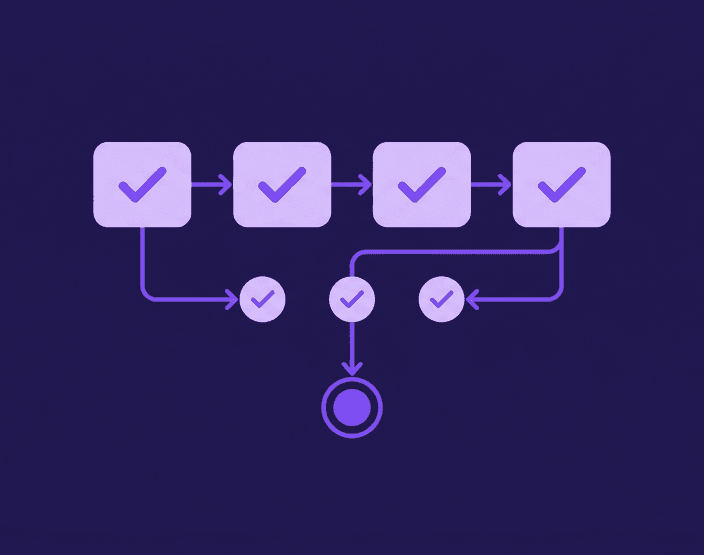
One email isn't enough. A strategic sequence is essential.
The Optimal Sequence Length
4-5 emails total is the sweet spot.
Fewer than 3: You're giving up too early
More than 6: Diminishing returns and annoyance risk
Timing Between Emails
Days After Previous | |
|---|---|
Email 1 (Initial) | - |
Email 2 (Follow-up 1) | 2-3 days |
Email 3 (Follow-up 2) | 4-5 days |
Email 4 (Follow-up 3) | 5-7 days |
Email 5 (Breakup) | 7-10 days |
Total sequence length: ~3-4 weeks
Varying Your Approach
Each email should bring something new:
Email 1: Primary value prop + social proof
Email 2: Different angle or additional benefit
Email 3: Case study or specific result
Email 4: New trigger or relevance hook
Email 5: Breakup/final follow-up
Don't just resend the same pitch. Treat each touchpoint as an opportunity to add value or try a new angle.
Multi-Channel Integration
The best sequences aren't email-only:
Layered approach:
Day 1: Email #1
Day 2: LinkedIn connection request
Day 5: Email #2
Day 7: LinkedIn comment/engagement
Day 10: Email #3 + LinkedIn message
Day 15: Email #4 (optional phone)
Day 20: Breakup email
Multiple channels increase touchpoints without increasing email volume (and spam risk).
---
Part 5: Timing & Sending
When you send matters almost as much as what you send.
Best Days to Send Cold Email
Based on aggregate data:
Day | Performance |
|---|---|
Monday | ⭐⭐ (inbox overload) |
Tuesday | ⭐⭐⭐⭐⭐ (best) |
Wednesday | ⭐⭐⭐⭐⭐ (best) |
Thursday | ⭐⭐⭐⭐ (good) |
Friday | ⭐⭐ (mental checkout) |
Tuesday-Wednesday are consistently top performers. Monday mornings compete with inbox overload. Friday afternoons see mental checkout.
Best Times to Send
Target: 9-11 AM and 1-3 PM in your prospect's timezone
Morning catches early email checkers. Post-lunch hits the afternoon productivity window.
Avoid:
Before 8 AM (feels pushy)
Lunch hour (likely to get skipped)
After 5 PM (lost in overnight pile)
Time Zone Optimization
If you're targeting US prospects:
Send to East Coast first (morning send)
Stagger West Coast by 3 hours
International requires segment-specific timing
Most cold email platforms offer timezone-based sending.
---
Part 6: Measurement & Optimization
You can't improve what you don't measure.
Key Metrics to Track
Metric | Benchmark | What It Tells You |
|---|---|---|
Open Rate | 50-70% | Subject line + deliverability |
Reply Rate | 5-15% | Copy quality + targeting |
Positive Reply Rate | 2-8% | Value prop resonance |
Bounce Rate | <5% | List quality |
Unsubscribe Rate | <1% | Targeting + frequency |
Diagnosing Problems
Low open rates (<50%)?
Test subject lines
Check deliverability (inbox placement tests)
Verify sending reputation
Opens but no replies?
Copy isn't resonating
Targeting is off
CTA isn't compelling
Replies but no meetings?
Follow-up timing or quality
Qualification issues
Offer/value prop mismatch
A/B Testing Framework
Test one variable at a time:
Week 1-2: Test subject lines (keep copy constant)
Week 3-4: Test opening lines (best subject, vary opener)
Week 5-6: Test CTAs (best subject + opener, vary CTA)
Minimum 100 sends per variant for statistical significance.
---
Part 7: Compliance & Ethics
Cold email isn't spam when done right. Here's how to stay compliant and ethical.
Legal Requirements
CAN-SPAM (US):
Clear identification of sender
Physical address included
Opt-out mechanism
Honor opt-outs promptly
GDPR (EU/UK):
Legitimate interest must exist
Data must be relevant and accurate
Easy opt-out required
Data retention limits apply
CASL (Canada):
Implied or express consent required
Sender identification
Unsubscribe mechanism
When in doubt: Consult legal counsel for your specific situation.
Ethical Guidelines
Beyond legal compliance:
Target relevantly. Don't spam everyone with a pulse.
Provide value. Your email should be worth reading.
Respect opt-outs. Immediately, completely, forever.
Be honest. No fake urgency, fake familiarity, or misleading claims.
Don't over-send. Persistence has limits.
Cold email done right is a service-connecting buyers with solutions they need. Done wrong, it's noise pollution.
---
The Bottom Line
Cold email best practices in 2026 come down to this:
Technical foundation first. Deliverability is non-negotiable.
Quality targeting. Right people > more people.
Personalization at scale. Show you've done the work.
Strategic sequences. Multiple touchpoints, varied approaches.
Continuous optimization. Test, measure, improve.
Master these, and cold email becomes a predictable, scalable channel for growth.
---
Not interested in building all this yourself?
Email Company runs done-for-you cold email campaigns for agencies. We handle the infrastructure, deliverability, list building, copywriting, and optimization-you white-label it to your clients.
No hiring. No training. No risk.
Introduction
Cold email works. When done right.
The problem? Most cold email is done wrong. Terrible targeting, lazy copy, poor deliverability-it's no wonder "cold email is dead" has become a popular refrain.
But the data tells a different story: companies that master cold email outreach consistently report it as one of their top lead generation channels.
This guide covers everything you need to know about cold email best practices in 2026-from technical setup to copywriting to timing. Consider it your playbook for outbound success.
Part 1: Technical Setup & Deliverability
Before you write a single word of copy, you need to nail the technical foundation. If your emails don't reach the inbox, nothing else matters.
Domain Setup Best Practices
Never send cold email from your primary domain.
If your main site is acme.com, set up separate sending domains:
getacme.com
tryacme.com
acme-outreach.com
Why? If your cold email domain gets flagged for spam, it won't affect your company's primary domain reputation. Isolated risk.
DNS records to configure:
SPF (Sender Policy Framework) - Tells receiving servers which mail servers are authorized to send on your behalf.
DKIM (DomainKeys Identified Mail) - Adds a digital signature to verify your emails haven't been tampered with.
DMARC (Domain-based Message Authentication) - Specifies what to do with emails that fail SPF or DKIM checks.
Pro tip: Use a tool like MXToolbox or your cold email platform's deliverability checker to verify setup.
Warming Up Your Domain
New sending domains have no reputation. Sending 500 emails on day one will get you flagged instantly.
The warm-up protocol:
Week | Daily Volume | Focus |
|---|---|---|
Week 1 | 10-20 emails | Warm-up only, high engagement contacts |
Week 2 | 20-40 emails | Mix warm-up + light prospecting |
Week 3 | 40-60 emails | Gradual campaign ramp |
Week 4+ | 50-100 emails | Full prospecting (maintain warm-up) |
During warm-up:
Use a warm-up tool that exchanges emails between real inboxes
Send to engaged contacts who will open and reply
Gradually increase volume-no sudden spikes
Warning signs your domain is in trouble:
Bounce rate over 5%
Spam complaint rate over 0.1%
Replies suddenly stop
Emails landing in promotions/spam tabs
Email Service Provider Selection
Not all ESPs are created equal for cold outreach. Traditional marketing platforms (Mailchimp, ConvertKit) will shut you down for cold email.
Purpose-built cold email platforms:
Instantly
Smartlead
Lemlist
Apollo
Woodpecker
These are designed for outbound, with features like inbox rotation, warm-up, and deliverability monitoring.
Inbox Rotation
Don't send all your emails from one account. Spread volume across multiple inboxes to:
Reduce per-inbox sending limits
Diversify risk if one inbox gets flagged
Maintain sender reputation across multiple domains
Rule of thumb: 30-50 emails per inbox per day maximum for cold outreach.
Frequently Asked Questions
Is cold email legal?
Yes, when done correctly. In the US, CAN-SPAM requires sender identification, physical address, and opt-out mechanism. GDPR (EU) requires legitimate interest and easy opt-out. Always consult legal counsel for your specific situation.
How many emails can I send per day?
Limit to 30-50 emails per inbox per day for cold outreach. Spread volume across multiple inboxes and domains to maintain sender reputation.
How long should I warm up a new domain?
Minimum 2-4 weeks before scaling volume. Start with 10-20 emails/day and gradually increase. Use a dedicated warm-up tool that exchanges emails between real inboxes.
What's a good response rate for cold email?
Benchmark response rates: 1-5% is typical, 5-10% is good, 10%+ is excellent. Personalized campaigns to well-targeted lists can achieve 15-20%+ response rates.
Should I use a cold email tool or regular email?
Use purpose-built cold email platforms (Instantly, Smartlead, Apollo) - they offer inbox rotation, warm-up, and deliverability monitoring. Traditional marketing tools will shut you down.
Related Guides
---
Part 2: List Building & Targeting
Your list determines your results. A brilliant email to the wrong people is wasted effort.
Ideal Customer Profile (ICP)
Before building any list, define your ICP with specificity:
Company attributes:
Industry/vertical
Company size (employees, revenue)
Technology used
Growth stage
Geographic location
Contact attributes:
Job title(s)
Department
Seniority level
Decision-making authority
The more precise your ICP, the better your targeting, and the higher your response rates.
List Quality Over Quantity
The math that matters:
10,000 emails to a mediocre list: 0.5% response rate = 50 responses
1,000 emails to a perfect list: 5% response rate = 50 responses
Same output, 1/10th the volume. Better economics, better deliverability, better reputation.
Data Sources
First-party data (best quality):
Website visitors (with intent signals)
Webinar/event registrants
Content downloaders
Existing customer referrals
Third-party data:
LinkedIn Sales Navigator
Apollo
ZoomInfo
Clearbit
Lusha
Intent data (next level):
Bombora
G2 intent signals
Custom scraping of job posts, technology stacks, funding announcements
List Hygiene
Bad data kills deliverability. Before any campaign:
Verify emails - Use tools like NeverBounce, ZeroBounce, or Hunter to validate
Remove catch-alls - These accept any email but often don't reach real people
Deduplicate - Don't hit the same person from multiple angles
Check suppression lists - Exclude previous unsubscribes and bounces
Target email validity rate: 95%+ before sending.
---
Part 3: Copywriting & Personalization
Now for the part everyone jumps to first (mistake). With your technical foundation and list in place, let's write emails that convert.
The Structure That Works
Optimal cold email structure:
Subject line: 3-6 words, curiosity or personalization
Opening line: Personalized hook (not "I hope this finds you well")
Body: 2-3 sentences max-problem, value prop, social proof
CTA: One clear, low-friction ask
Total length: Under 100 words. Ideally 50-75.
Personalization Levels
Not all personalization is equal. Here's the hierarchy:
Level 1: Basic (better than nothing)
{first_name}
{company_name}
{industry}
Level 2: Intermediate (noticeable)
Recent company news
Technology they use
Recent hire/change
Level 3: Advanced (high impact)
Specific observation about their website/product
Reference to their content (article, podcast, post)
Mutual connection
Level 4: Extreme (reserved for whales)
Personalized video
Custom research document
Tailored analysis of their business
Rule of thumb: Spend personalization effort proportional to deal size. A $1k deal doesn't warrant a custom video. A $100k deal might.
Opening Lines That Work
The first line is your handshake. It sets the tone for everything that follows.
Good opening lines:
"Saw [company] just [specific trigger event]-congrats!"
"I noticed [specific observation about their site/product]."
"Your post on [topic] resonated-especially the point about..."
"[Mutual connection] suggested I reach out."
Bad opening lines:
"I hope this email finds you well."
"My name is X and I work for Y."
"I'm reaching out because..."
"I'd love to pick your brain."
CTAs That Convert
Your call-to-action should be:
Clear - No ambiguity about what you're asking
Low-friction - Easy to say yes to
Singular - One ask, not five
High-converting CTAs:
"Worth a 15-minute call this week?"
"Would it make sense to connect?"
"Open to hearing more?"
"Can I send over a brief case study?"
Low-converting CTAs:
"Let me know if you want to schedule a demo, discuss pricing, or see our documentation."
"I'd love to set up an hour to walk through everything."
"Please review the attached 10-page proposal."
---
Part 4: Sequence Strategy
One email isn't enough. A strategic sequence is essential.
The Optimal Sequence Length
4-5 emails total is the sweet spot.
Fewer than 3: You're giving up too early
More than 6: Diminishing returns and annoyance risk
Timing Between Emails
Days After Previous | |
|---|---|
Email 1 (Initial) | - |
Email 2 (Follow-up 1) | 2-3 days |
Email 3 (Follow-up 2) | 4-5 days |
Email 4 (Follow-up 3) | 5-7 days |
Email 5 (Breakup) | 7-10 days |
Total sequence length: ~3-4 weeks
Varying Your Approach
Each email should bring something new:
Email 1: Primary value prop + social proof
Email 2: Different angle or additional benefit
Email 3: Case study or specific result
Email 4: New trigger or relevance hook
Email 5: Breakup/final follow-up
Don't just resend the same pitch. Treat each touchpoint as an opportunity to add value or try a new angle.
Multi-Channel Integration
The best sequences aren't email-only:
Layered approach:
Day 1: Email #1
Day 2: LinkedIn connection request
Day 5: Email #2
Day 7: LinkedIn comment/engagement
Day 10: Email #3 + LinkedIn message
Day 15: Email #4 (optional phone)
Day 20: Breakup email
Multiple channels increase touchpoints without increasing email volume (and spam risk).
---
Part 5: Timing & Sending
When you send matters almost as much as what you send.
Best Days to Send Cold Email
Based on aggregate data:
Day | Performance |
|---|---|
Monday | ⭐⭐ (inbox overload) |
Tuesday | ⭐⭐⭐⭐⭐ (best) |
Wednesday | ⭐⭐⭐⭐⭐ (best) |
Thursday | ⭐⭐⭐⭐ (good) |
Friday | ⭐⭐ (mental checkout) |
Tuesday-Wednesday are consistently top performers. Monday mornings compete with inbox overload. Friday afternoons see mental checkout.
Best Times to Send
Target: 9-11 AM and 1-3 PM in your prospect's timezone
Morning catches early email checkers. Post-lunch hits the afternoon productivity window.
Avoid:
Before 8 AM (feels pushy)
Lunch hour (likely to get skipped)
After 5 PM (lost in overnight pile)
Time Zone Optimization
If you're targeting US prospects:
Send to East Coast first (morning send)
Stagger West Coast by 3 hours
International requires segment-specific timing
Most cold email platforms offer timezone-based sending.
---
Part 6: Measurement & Optimization
You can't improve what you don't measure.
Key Metrics to Track
Metric | Benchmark | What It Tells You |
|---|---|---|
Open Rate | 50-70% | Subject line + deliverability |
Reply Rate | 5-15% | Copy quality + targeting |
Positive Reply Rate | 2-8% | Value prop resonance |
Bounce Rate | <5% | List quality |
Unsubscribe Rate | <1% | Targeting + frequency |
Diagnosing Problems
Low open rates (<50%)?
Test subject lines
Check deliverability (inbox placement tests)
Verify sending reputation
Opens but no replies?
Copy isn't resonating
Targeting is off
CTA isn't compelling
Replies but no meetings?
Follow-up timing or quality
Qualification issues
Offer/value prop mismatch
A/B Testing Framework
Test one variable at a time:
Week 1-2: Test subject lines (keep copy constant)
Week 3-4: Test opening lines (best subject, vary opener)
Week 5-6: Test CTAs (best subject + opener, vary CTA)
Minimum 100 sends per variant for statistical significance.
---
Part 7: Compliance & Ethics
Cold email isn't spam when done right. Here's how to stay compliant and ethical.
Legal Requirements
CAN-SPAM (US):
Clear identification of sender
Physical address included
Opt-out mechanism
Honor opt-outs promptly
GDPR (EU/UK):
Legitimate interest must exist
Data must be relevant and accurate
Easy opt-out required
Data retention limits apply
CASL (Canada):
Implied or express consent required
Sender identification
Unsubscribe mechanism
When in doubt: Consult legal counsel for your specific situation.
Ethical Guidelines
Beyond legal compliance:
Target relevantly. Don't spam everyone with a pulse.
Provide value. Your email should be worth reading.
Respect opt-outs. Immediately, completely, forever.
Be honest. No fake urgency, fake familiarity, or misleading claims.
Don't over-send. Persistence has limits.
Cold email done right is a service-connecting buyers with solutions they need. Done wrong, it's noise pollution.
---
The Bottom Line
Cold email best practices in 2026 come down to this:
Technical foundation first. Deliverability is non-negotiable.
Quality targeting. Right people > more people.
Personalization at scale. Show you've done the work.
Strategic sequences. Multiple touchpoints, varied approaches.
Continuous optimization. Test, measure, improve.
Master these, and cold email becomes a predictable, scalable channel for growth.
---
Not interested in building all this yourself?
Email Company runs done-for-you cold email campaigns for agencies. We handle the infrastructure, deliverability, list building, copywriting, and optimization-you white-label it to your clients.
No hiring. No training. No risk.

Similar Blog You May Like
Similar Blog You May Like
Similar Blog You May Like


A profitable outbound offer. Without building it yourself
If you want to sell cold email but don’t want the headcount, learning curve, or risk. We should talk. We onboard a limited number of agency partners each month.
A profitable outbound offer. Without building it yourself
If you want to sell cold email but don’t want the headcount, learning curve, or risk. We should talk. We onboard a limited number of agency partners each month.
A profitable outbound offer. Without building it yourself
If you want to sell cold email but don’t want the headcount, learning curve, or risk. We should talk. We onboard a limited number of agency partners each month.