How to Follow Up on a Cold Email in 2026 (Without Being Annoying)
How to Follow Up on a Cold Email in 2026 (Without Being Annoying)
Master cold email follow up with data-backed timing, templates that work, and the exact framework top sales teams use to turn silence into booked meetings.
Master cold email follow up with data-backed timing, templates that work, and the exact framework top sales teams use to turn silence into booked meetings.
Introduction
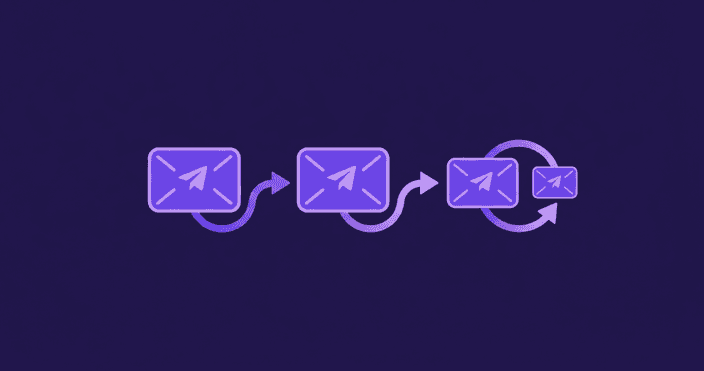
Your cold email didn't get a response. Now what?
Here's what most people get wrong: they either give up after one email (leaving money on the table) or they spam their prospect into oblivion (burning the bridge forever).
The truth about cold email follow up is counterintuitive: 80% of sales require 5+ follow-ups, but 44% of salespeople give up after just one attempt.
In this guide, you'll learn the exact cold email follow up framework that top-performing sales teams use to turn silence into booked meetings-without being that annoying person clogging up someone's inbox.
Why Cold Email Follow Ups Work
Let's address the elephant in the room: doesn't following up feel... pushy?
Not if you do it right.
Here's why follow ups work:
Timing rarely aligns. Your first email probably hit when your prospect was in a meeting, drowning in their inbox, or focused on something urgent. A follow up catches them at a better time.
Persistence signals value. If you give up after one email, you're signaling that your offer isn't important enough to pursue. Multiple touchpoints show you believe in what you're offering.
The "mere exposure effect." Psychology research shows we develop preference for things we see repeatedly. Each follow up increases familiarity and trust-as long as you're providing value, not just asking.
The Data on Follow Up Effectiveness
Let's look at what the numbers say:
Follow Up Number | Response Rate Increase |
|---|---|
1st email | Baseline |
2nd email (follow up 1) | +30% cumulative |
3rd email (follow up 2) | +21% cumulative |
4th email (follow up 3) | +12% cumulative |
Source: Analysis of 1M+ cold emails
The pattern is clear: response rates compound with each well-crafted follow up, but diminishing returns kick in after the 3rd or 4th touchpoint.
The Perfect Cold Email Follow Up Framework
After analyzing thousands of successful cold email campaigns, we've identified what separates good follow ups from great ones.
The PAVE Framework
P - Provide new value
Don't just "check in." Each follow up should add something: a new insight, resource, or angle they haven't seen.
A - Acknowledge their time
Brief is beautiful. Your prospect is busy. Get to the point in 3-4 sentences max.
V - Vary your approach
Don't send the same email twice. Change your angle, tone, or offer each time.
E - Easy next step
Make the ask so simple that saying yes takes less effort than saying no.
Cold Email Follow Up Templates That Work
Follow Up #1: The "Quick Bump" (Send 2-3 days after initial email)
Subject: RE: [Original subject line]
[First name],
Quick bump on this-did my last email get buried?
[One-sentence value reminder: "Wanted to see if reducing your cost-per-meeting by 40% is still on your radar."]
Happy to share how we did this for [Similar company] in a 15-minute call.
When works this week?
[Your name]
Why it works: Short, references previous email, reminds them of the value, easy ask.
Follow Up #2: The "New Angle" (Send 4-5 days later)
Subject: Thought of you when I saw this
[First name],
Just saw that [relevant industry news/trigger event/company update].
That made me think about [connection to your value prop].
Curious if this is something you're thinking about? Would love to share how teams like yours are approaching it.
15 minutes this week?
[Your name]
Why it works: Shows you're paying attention, provides new context, feels personal rather than automated.
Follow Up #3: The "Social Proof Drop" (Send 5-7 days later)
Subject: How [Similar Company] [achieved specific result]
[First name],
Wanted to share a quick win from a company in your space.
[Company name] was struggling with [problem you solve]. Within [timeframe], they [specific result with numbers].
Here's what they did differently: [One key insight]
Worth a 15-minute chat to see if this applies to your situation?
[Your name]
Why it works: Leads with proof, not pitch. Specific numbers build credibility. The insight provides standalone value.
Follow Up #4: The "Breakup Email" (Send 7-10 days later)
Subject: Should I close your file?
[First name],
I've reached out a few times but haven't heard back-no worries, I get it.
I'm going to assume the timing isn't right and remove you from my list.
If things change or you want to revisit [outcome you deliver], just hit reply. I'll be here.
All the best,
[Your name]
Why it works: Uses loss aversion psychology. Often generates responses from people who were interested but busy. Leaves door open without burning the bridge.
Cold Email Follow Up Timing: When to Send
Timing can make or break your follow up sequence. Here's what the data shows:
Optimal Follow Up Schedule
Follow up #1: 2-3 business days after initial email
Follow up #2: 4-5 business days after follow up #1
Follow up #3: 5-7 business days after follow up #2
Follow up #4 (breakup): 7-10 business days after follow up #3
Best Days and Times
Best days: Tuesday, Wednesday, Thursday
Best times: 9-11 AM and 1-3 PM in your prospect's timezone
Avoid: Monday mornings (inbox hell), Friday afternoons (mental checkout), and anything after 5 PM.
Common Cold Email Follow Up Mistakes
❌ Mistake #1: "Just checking in"
This adds zero value and screams "I have nothing useful to say."
Instead: Lead with something new-an insight, resource, or fresh angle.
❌ Mistake #2: Making them feel guilty
"I noticed you haven't replied..." or "I'm sure you're busy, but..."
These guilt-trip openers put your prospect on the defensive and damage the relationship.
Instead: Keep it positive and assume good intent.
❌ Mistake #3: Repeating your first email
If your first email didn't work, sending the same pitch again won't magically change their mind.
Instead: Try a different angle, new value prop, or alternative offer.
❌ Mistake #4: Following up too frequently
Daily follow ups will get you blocked or reported for spam.
Instead: Space out your touchpoints and limit your sequence to 4-5 emails total.
❌ Mistake #5: Writing novels
Your follow up should be shorter than your initial email, not longer.
Instead: Keep it under 75 words. Every word should earn its place.
When to Stop Following Up
Knowing when to stop is just as important as knowing how to follow up.
Stop when:
They explicitly say "no" or "not interested"
They ask you to stop emailing
You've sent 4-5 emails with no response
They're no longer the right fit (job change, company pivot)
Don't stop just because:
They haven't responded (silence ≠ rejection)
You feel awkward
You're worried about being annoying (if you're providing value, you're not)
Advanced: Multi-Channel Follow Up Strategy
The best cold email follow ups don't live in email alone.
Layer in these channels:
LinkedIn: Connect + brief message referencing your email
Twitter/X: Engage with their content genuinely before your next email
Phone: Strategic voicemail that complements your email sequence
Direct mail: For high-value prospects, a well-timed physical touchpoint can break through
Pro tip: Reference your other touchpoints in your emails: "I left you a quick voicemail yesterday..." This shows persistence and professionalism.
The Bottom Line
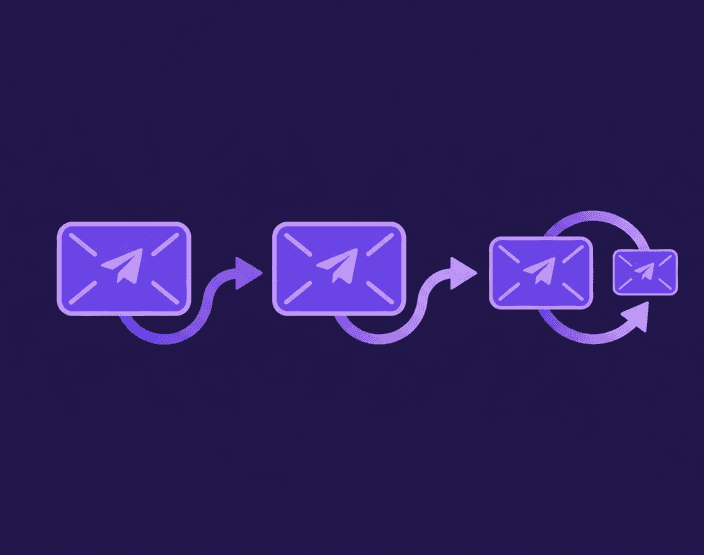
Cold email follow up isn't about pestering people-it's about providing enough touchpoints for the right people to find the right time to respond.
Remember:
80% of deals require 5+ touchpoints
Each follow up should add new value
Keep it short, vary your approach, and make the next step easy
Know when to walk away gracefully
The difference between deals won and lost often comes down to whether you follow up intelligently or give up too soon.
Frequently Asked Questions
How many follow-up emails should I send?
The sweet spot is 4-5 follow-up emails total. Fewer than 3 means you're giving up too early, while more than 6 leads to diminishing returns and risks annoying your prospect.
When should I send my first follow-up?
Send your first follow-up 2-3 business days after your initial email. This gives your prospect time to see your first email without letting too much time pass.
What's the best day to send follow-up emails?
Tuesday, Wednesday, and Thursday are the best days. Avoid Monday mornings (inbox overload) and Friday afternoons (mental checkout).
How do I follow up without being annoying?
Add new value with each follow-up. Don't just "check in" - provide a new insight, case study, or angle. Keep emails short (under 75 words) and space them 3-7 days apart.
Related Guides
Master your entire cold email strategy:
---
Want to scale your cold email without the headache?
Email Company runs done-for-you cold email campaigns for agencies who want to offer this service to their clients. We handle the infrastructure, deliverability, and execution-you charge the markup.
Introduction
Your cold email didn't get a response. Now what?
Here's what most people get wrong: they either give up after one email (leaving money on the table) or they spam their prospect into oblivion (burning the bridge forever).
The truth about cold email follow up is counterintuitive: 80% of sales require 5+ follow-ups, but 44% of salespeople give up after just one attempt.
In this guide, you'll learn the exact cold email follow up framework that top-performing sales teams use to turn silence into booked meetings-without being that annoying person clogging up someone's inbox.
Why Cold Email Follow Ups Work
Let's address the elephant in the room: doesn't following up feel... pushy?
Not if you do it right.
Here's why follow ups work:
Timing rarely aligns. Your first email probably hit when your prospect was in a meeting, drowning in their inbox, or focused on something urgent. A follow up catches them at a better time.
Persistence signals value. If you give up after one email, you're signaling that your offer isn't important enough to pursue. Multiple touchpoints show you believe in what you're offering.
The "mere exposure effect." Psychology research shows we develop preference for things we see repeatedly. Each follow up increases familiarity and trust-as long as you're providing value, not just asking.
The Data on Follow Up Effectiveness
Let's look at what the numbers say:
Follow Up Number | Response Rate Increase |
|---|---|
1st email | Baseline |
2nd email (follow up 1) | +30% cumulative |
3rd email (follow up 2) | +21% cumulative |
4th email (follow up 3) | +12% cumulative |
Source: Analysis of 1M+ cold emails
The pattern is clear: response rates compound with each well-crafted follow up, but diminishing returns kick in after the 3rd or 4th touchpoint.
The Perfect Cold Email Follow Up Framework
After analyzing thousands of successful cold email campaigns, we've identified what separates good follow ups from great ones.
The PAVE Framework
P - Provide new value
Don't just "check in." Each follow up should add something: a new insight, resource, or angle they haven't seen.
A - Acknowledge their time
Brief is beautiful. Your prospect is busy. Get to the point in 3-4 sentences max.
V - Vary your approach
Don't send the same email twice. Change your angle, tone, or offer each time.
E - Easy next step
Make the ask so simple that saying yes takes less effort than saying no.
Cold Email Follow Up Templates That Work
Follow Up #1: The "Quick Bump" (Send 2-3 days after initial email)
Subject: RE: [Original subject line]
[First name],
Quick bump on this-did my last email get buried?
[One-sentence value reminder: "Wanted to see if reducing your cost-per-meeting by 40% is still on your radar."]
Happy to share how we did this for [Similar company] in a 15-minute call.
When works this week?
[Your name]
Why it works: Short, references previous email, reminds them of the value, easy ask.
Follow Up #2: The "New Angle" (Send 4-5 days later)
Subject: Thought of you when I saw this
[First name],
Just saw that [relevant industry news/trigger event/company update].
That made me think about [connection to your value prop].
Curious if this is something you're thinking about? Would love to share how teams like yours are approaching it.
15 minutes this week?
[Your name]
Why it works: Shows you're paying attention, provides new context, feels personal rather than automated.
Follow Up #3: The "Social Proof Drop" (Send 5-7 days later)
Subject: How [Similar Company] [achieved specific result]
[First name],
Wanted to share a quick win from a company in your space.
[Company name] was struggling with [problem you solve]. Within [timeframe], they [specific result with numbers].
Here's what they did differently: [One key insight]
Worth a 15-minute chat to see if this applies to your situation?
[Your name]
Why it works: Leads with proof, not pitch. Specific numbers build credibility. The insight provides standalone value.
Follow Up #4: The "Breakup Email" (Send 7-10 days later)
Subject: Should I close your file?
[First name],
I've reached out a few times but haven't heard back-no worries, I get it.
I'm going to assume the timing isn't right and remove you from my list.
If things change or you want to revisit [outcome you deliver], just hit reply. I'll be here.
All the best,
[Your name]
Why it works: Uses loss aversion psychology. Often generates responses from people who were interested but busy. Leaves door open without burning the bridge.
Cold Email Follow Up Timing: When to Send
Timing can make or break your follow up sequence. Here's what the data shows:
Optimal Follow Up Schedule
Follow up #1: 2-3 business days after initial email
Follow up #2: 4-5 business days after follow up #1
Follow up #3: 5-7 business days after follow up #2
Follow up #4 (breakup): 7-10 business days after follow up #3
Best Days and Times
Best days: Tuesday, Wednesday, Thursday
Best times: 9-11 AM and 1-3 PM in your prospect's timezone
Avoid: Monday mornings (inbox hell), Friday afternoons (mental checkout), and anything after 5 PM.
Common Cold Email Follow Up Mistakes
❌ Mistake #1: "Just checking in"
This adds zero value and screams "I have nothing useful to say."
Instead: Lead with something new-an insight, resource, or fresh angle.
❌ Mistake #2: Making them feel guilty
"I noticed you haven't replied..." or "I'm sure you're busy, but..."
These guilt-trip openers put your prospect on the defensive and damage the relationship.
Instead: Keep it positive and assume good intent.
❌ Mistake #3: Repeating your first email
If your first email didn't work, sending the same pitch again won't magically change their mind.
Instead: Try a different angle, new value prop, or alternative offer.
❌ Mistake #4: Following up too frequently
Daily follow ups will get you blocked or reported for spam.
Instead: Space out your touchpoints and limit your sequence to 4-5 emails total.
❌ Mistake #5: Writing novels
Your follow up should be shorter than your initial email, not longer.
Instead: Keep it under 75 words. Every word should earn its place.
When to Stop Following Up
Knowing when to stop is just as important as knowing how to follow up.
Stop when:
They explicitly say "no" or "not interested"
They ask you to stop emailing
You've sent 4-5 emails with no response
They're no longer the right fit (job change, company pivot)
Don't stop just because:
They haven't responded (silence ≠ rejection)
You feel awkward
You're worried about being annoying (if you're providing value, you're not)
Advanced: Multi-Channel Follow Up Strategy
The best cold email follow ups don't live in email alone.
Layer in these channels:
LinkedIn: Connect + brief message referencing your email
Twitter/X: Engage with their content genuinely before your next email
Phone: Strategic voicemail that complements your email sequence
Direct mail: For high-value prospects, a well-timed physical touchpoint can break through
Pro tip: Reference your other touchpoints in your emails: "I left you a quick voicemail yesterday..." This shows persistence and professionalism.
The Bottom Line
Cold email follow up isn't about pestering people-it's about providing enough touchpoints for the right people to find the right time to respond.
Remember:
80% of deals require 5+ touchpoints
Each follow up should add new value
Keep it short, vary your approach, and make the next step easy
Know when to walk away gracefully
The difference between deals won and lost often comes down to whether you follow up intelligently or give up too soon.
Frequently Asked Questions
How many follow-up emails should I send?
The sweet spot is 4-5 follow-up emails total. Fewer than 3 means you're giving up too early, while more than 6 leads to diminishing returns and risks annoying your prospect.
When should I send my first follow-up?
Send your first follow-up 2-3 business days after your initial email. This gives your prospect time to see your first email without letting too much time pass.
What's the best day to send follow-up emails?
Tuesday, Wednesday, and Thursday are the best days. Avoid Monday mornings (inbox overload) and Friday afternoons (mental checkout).
How do I follow up without being annoying?
Add new value with each follow-up. Don't just "check in" - provide a new insight, case study, or angle. Keep emails short (under 75 words) and space them 3-7 days apart.
Related Guides
Master your entire cold email strategy:
---
Want to scale your cold email without the headache?
Email Company runs done-for-you cold email campaigns for agencies who want to offer this service to their clients. We handle the infrastructure, deliverability, and execution-you charge the markup.

Similar Blog You May Like
Similar Blog You May Like
Similar Blog You May Like


A profitable outbound offer. Without building it yourself
If you want to sell cold email but don’t want the headcount, learning curve, or risk. We should talk. We onboard a limited number of agency partners each month.
A profitable outbound offer. Without building it yourself
If you want to sell cold email but don’t want the headcount, learning curve, or risk. We should talk. We onboard a limited number of agency partners each month.
A profitable outbound offer. Without building it yourself
If you want to sell cold email but don’t want the headcount, learning curve, or risk. We should talk. We onboard a limited number of agency partners each month.